In 2020, Sophisticated Comms Founder Nikki Milovanovic was invited to contribute the life story of her remarkable grandmother Jeanne to Canada’s most widely-read newspaper of record, The Globe and Mail – the publication most decorated publication at 2024’s journalism awards.
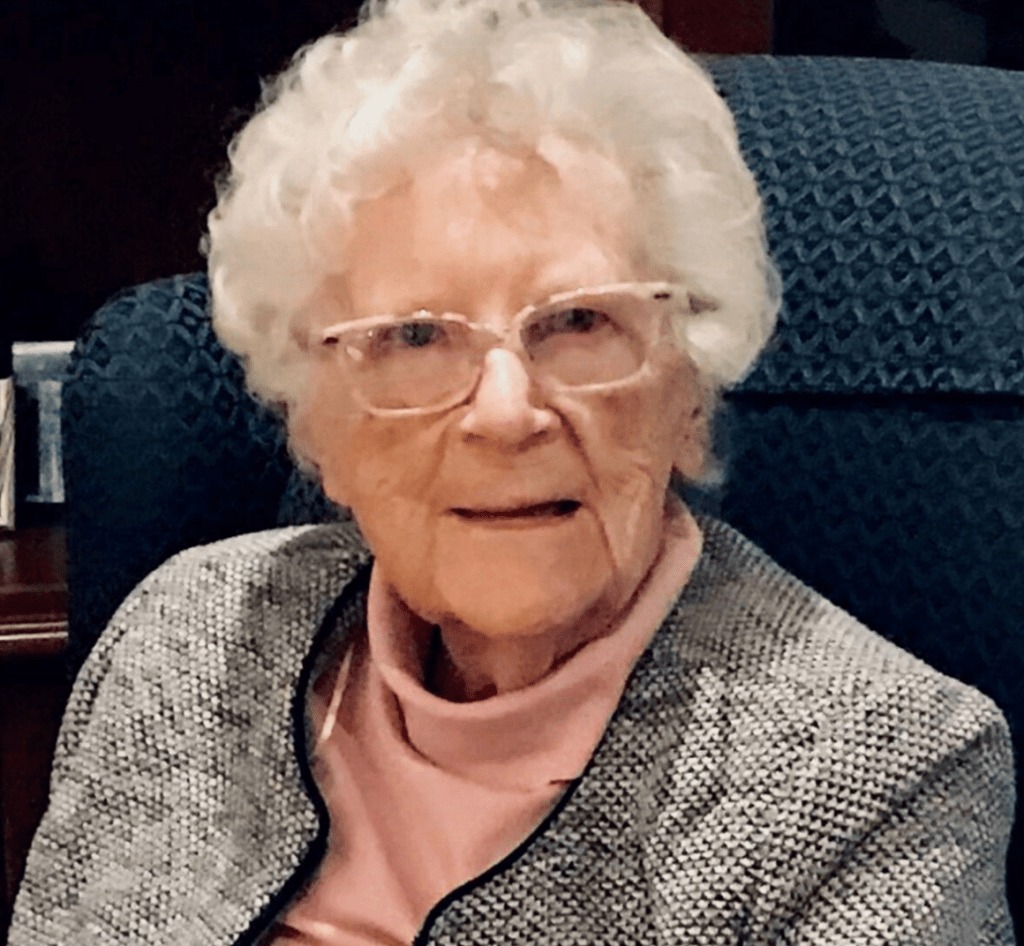
Jeanne Allen was the only child of a single mother in Cheltenham, U.K. who, during World War II, was sent to ‘dig for victory’ while her mother, Hester, worked in a munitions factory.
When Hester died suddenly, 13-year-old Jeanne was orphaned and confronted by a sour-faced vicar who begrudgingly offered to perform graveside rites – not in the church, due to her unwed status. Uncowed by his position, Jeanne told the vicar precisely where to go with his offer – a process she would not be shy to repeat throughout her lifetime as a pioneer for Women’s Rights.
In the years that followed, Jeanne finished her education as a scholarship student, then sought to get her nursing qualifications, obtaining room and board in a 3-year residential programme. She did not shy away from work, but never quite felt it was her destiny to become a Registered Nurse – years later she admitted her keen eye for fashion had made her partial to the uniform.
During her placement at the Royal Infirmary in Gloucester, she met a young man who’d sent all the nurses’ hearts aflutter, and it was not long before she and the refugee from former Yugoslavia were inseparable. Two years later, Jeanne and Dusan Milovanovic married and had their first son, Peter.
Although these were happy times, they were not without difficulties; Jeanne was not accepted by Dusan’s community, ‘the strange British wife’ of one of their most eligible Serbian bachelors was entirely frozen out. Additionally, due to their ‘foreign surname,’ the family encountered discrimination in Britain that Jeanne would never forget. This experience would compel her lifelong dedication to champion the human rights of others. Nevertheless, with a stiff upper lip, she set about making a home for her family, starting with wooden crates as a makeshift bassinet. She learned to sew and knit while Dusan learned to grow vegetables on an allotment to reduce costs for the growing family – which by 1959 included two more sons, Nicholas and David.
The family was poor but pragmatic: Dusan and Jeanne always encouraged their sons to value education; so when the Headmaster of Peter’s school had a frank discussion explaining their surname would limit his academic progress, they immediately began the process of emigrating. In August 1964, with little other than the reassurance of her sister-in-law, the family of five travelled from Liverpool to Canada.
Settling in Scarborough, Ontario, Jeanne juggled night shifts as a nurse to spend time with her young boys as the family acclimated to their new life. Eventually, she enrolled in college to become a teacher and work the same hours as her school-age sons – but she didn’t stop there. Jeanne and Dusan pursued degrees at the University of Toronto in tandem, attending courses on opposite nights to care for the children, rarely seeing each other for nearly a decade as they supported one other. Their dedication saw them both graduate in the same year as their youngest son, David, and their pride at these shared achievements was tremendous.
On the advice of her mentor, Jeanne decided rather than study to become a high school teacher, she would work to obtain the qualifications to become a Principal. She was elected President of the Federation of Women Teachers of Ontario, battling for Women’s rights and also served at national and international levels of Teacher’s Professional Organizations. During these years, Jeanne travelled far and wide, often bringing husband Dusan along. As her career accelerated and became more demanding, he retired, taking on the role of homemaker; learning to cook and do laundry. Their stereotype-shattering ‘modern’ relationship saw Dusan’s Serbian friends criticise him for ‘allowing’ his wife to work. With a sparkle in his eye, he’d respond he was laughing all the way to the bank.
The post-war spirit of innovation always stayed with her: Jeanne was entrepreneurial in her leadership roles, and her determination inspired others to work alongside her. She was no shrinking violet when it came to tackling the institutional “boys’ clubs.” Later in life, she would gleefully recount instances of male colleagues (often averse to a female manager) complaining that they couldn’t pronounce her ‘foreign’ surname – and how they never failed to pronounce it following her own pointed suggestion that they “remember what it rhymed with.” When male colleagues tried to exclude her using the traditional whiskey and cigar routine, she simply learned to appreciate scotch.
In 1987, Jeanne was appointed as the first female Superintendent of the Scarborough Board of Education, and it was there that she made the most impact, helping to fundamentally change the system to better serve and engage students. In 1988 Paul Addie, her long-time friend and colleague brought the literacy programme Reading Recovery to Canada, and in 1990, he asked Jeanne to oversee it in a few schools while he took on a two-year role in a different borough. When he returned, nationwide implementation was underway, and the pair teamed up to make it a tremendous success.
Her dedication to Reading Recovery took her (and her very modern husband) around the world, and to exotic locations beyond their wildest dreams, and they also enjoyed travelling for pleasure. In addition to spending time with friends and family at their cottage in the summer, Jeanne and Dusan decided to join the legions of snowbirds flocking South to Florida for the winter, purchasing a condo in St. Petersburg. They were enjoying life looking forward to both being retired, when Dusan suddenly succumbed to an acute illness. Jeanne and the family were devastated.
In her grief, she turned to family and the chosen family in England that she and Dusan had cultivated together. She returned every year to Florida, and as time went on, she kept busy and travelled the world – always gregarious and up for everything, typically in the company of a rapt audience.
One of her greatest journeys was to finally visit the native country of her late husband, seeing everything he had described. She was so enchanted by the culture and its international community that, along with a group of other women who had married Serbs after the war, she published her personal story in a book, the proceeds of which went to benefit children in orphanages in Serbia and Montenegro. She personally helped to select and distribute resources to the children.
When Jeanne did retire from the Scarborough Board of Education, she was fêted with an elaborate tribute, and received congratulations and well-wishes from colleagues, friends and family as well as.from eminent individuals far and wide – including the Prime Minister of Canada, Jean Chrétien.
Jeanne always worked to cultivate and maintain friendships, typically leaving events with at least one new connection. She travelled to visit friends around the world, took cruises and completed so many items on her ‘bucket list,’ she joked that she’d had to start adding more. Though illness in her last years left her more physically frail, she never failed to participate in the world around her – whether tottering through the Victoria and Albert museum with her walking stick; enjoying the beauty of the scenery at the family’s Haliburton cottage; or visiting her dear friend, neighbour and fellow activist Ms Jane Fee to share their customary 5 o’ clock cocktail.
One of the most wonderful things about Jeanne was her willingness to engage with the unknown – whether stepping off the dock into a completely foreign land; subverting traditional roles; blazing trails within the education sector; or campaigning for equality and diversity, Jeanne was nearly always open to trust that some new and marvellous experience was just around the corner.
 Sophisticated Comms